
Walk out to your car on a sunny afternoon and look at the hood at an angle. If you see fine circular scratches that light up like a spiderweb around the sun’s reflection, those are swirls. Almost every car in Florida has them, and no amount of washing or waxing will make them go away. That’s what paint correction is for. This guide explains what those marks actually are, how machine polishing removes them, the difference between 1-step and 2-step correction, and how to tell what your paint really needs.
Paint correction is machine polishing that levels a thin layer of clear coat to remove swirls, light scratches and haze. A 1-step correction removes roughly 60–70% of swirls and light defects. A 2-step correction removes roughly 85–95% for a near-mirror finish. Scratches that cut through the clear coat may not fully correct.
What Paint Correction Actually Is
Modern car paint has layers: primer, a colored base coat, and a clear coat on top. The clear coat is what gives paint its gloss, and it’s where nearly all swirls and light scratches live.
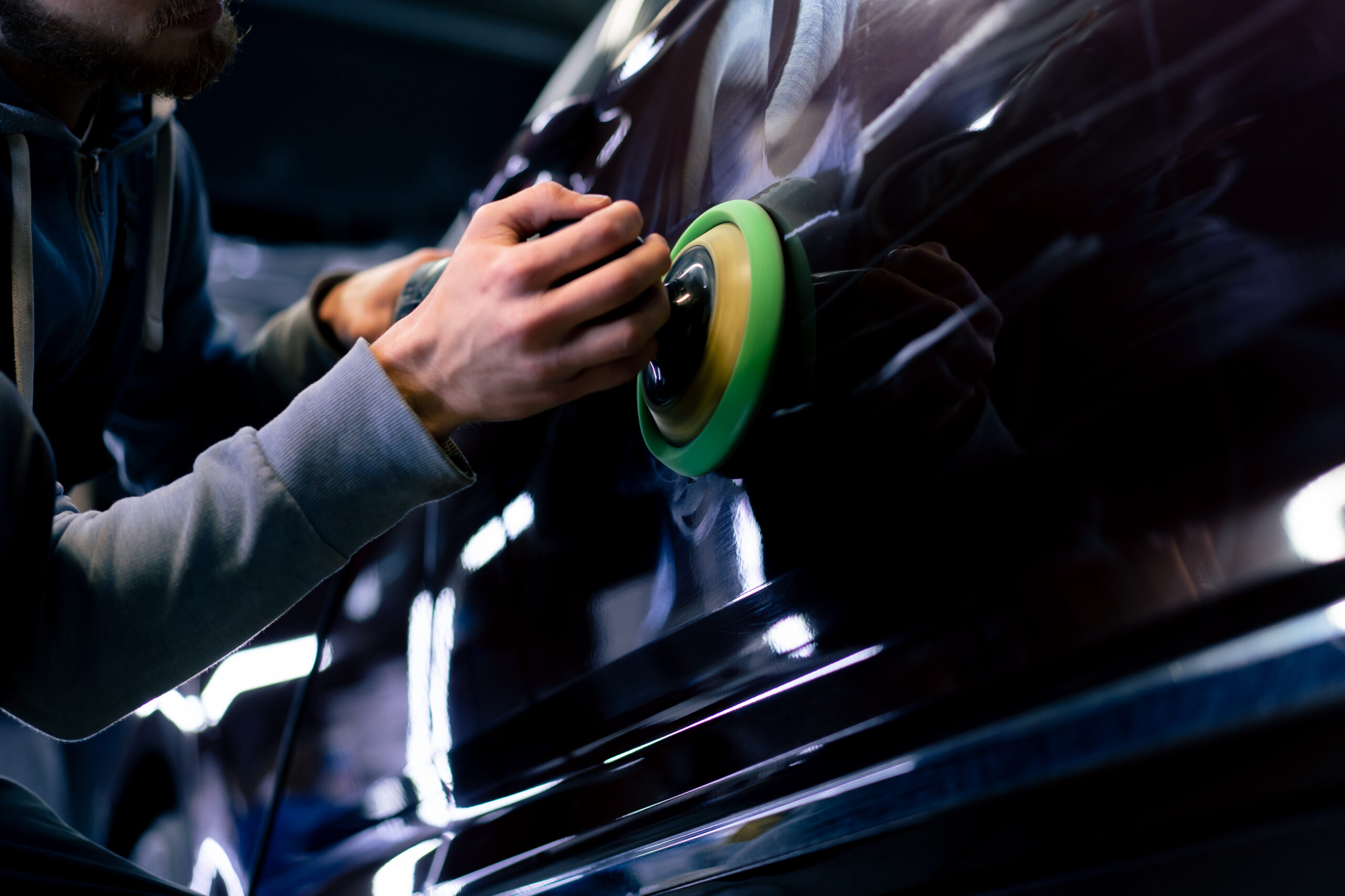
Paint correction uses a machine polisher, pads and abrasive polishes to carefully level the clear coat. By removing a very thin layer around a defect, the surface becomes flat again, and light reflects cleanly instead of scattering. The result is deeper gloss, sharper reflections and color that looks richer.
It’s different from waxing or glazing. Those products can fill or hide light marks for a while, but they wash away and the swirls come back. Correction physically removes the defects, which is why it’s also the right first step before a ceramic coating.
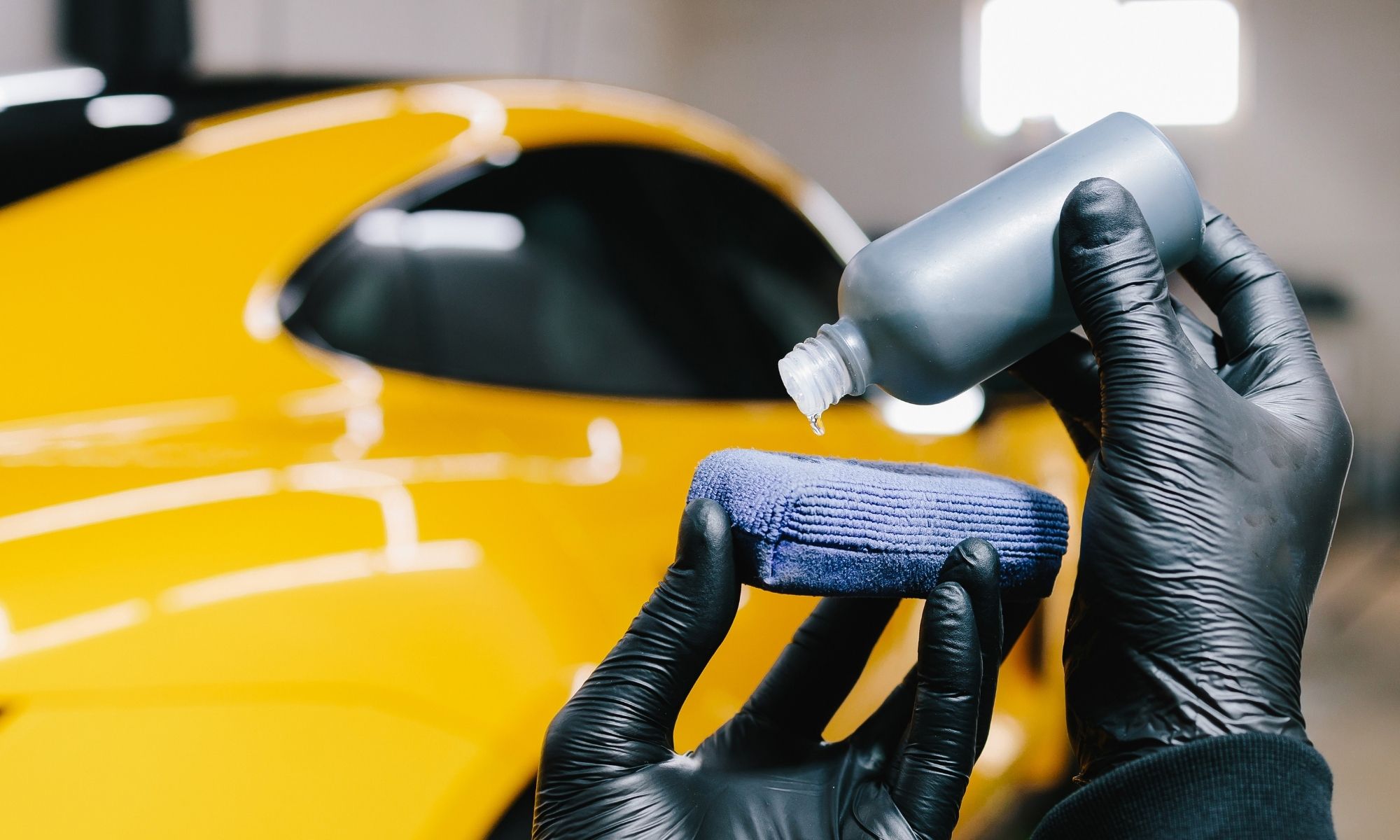
Swirls, Scratches and Other Defects
Not every mark on your paint is the same. Knowing the difference helps set realistic expectations.
- Swirl marks: fine, circular scratches mostly caused by washing and drying with dirty mitts, brushes or towels. Automatic tunnel washes are a common cause.
- Light scratches: isolated lines from fingernails around door handles, bags, or brushing against the car. Many sit in the clear coat and respond well to polishing.
- Water spot etching: mineral rings that have dried and etched into the clear coat. Light etching can often be polished out. See our water spot removal page.
- Oxidation and haze: a dull, chalky look, often on older cars parked outside under Florida sun.
- Bird dropping and bug etching: acidic residue left on hot paint can leave marks that need polishing.
- Deep scratches: if you can catch a fingernail in it, or you see primer or bare metal, the scratch has likely gone through the clear coat.
- Gently run a fingernail across the scratch.
- If your nail glides over it, it’s likely in the clear coat and a good candidate for correction.
- If your nail catches, it may be too deep to fully remove by polishing alone.
- Deep scratches through the clear coat may not fully correct, but they can often be made less noticeable.
1-Step vs. 2-Step Correction
Prince’s Mobile Detailing offers two levels of paint correction. The difference is how many polishing stages the paint goes through.
| 1-Step Correction | 2-Step Correction | |
|---|---|---|
| What it involves | One machine polishing stage | A cutting stage, then a refining polish |
| Defect removal | Roughly 60–70% of swirls and light defects | Roughly 85–95%, near-mirror finish |
| Best for | Daily drivers, lightly swirled paint, pre-coating prep | Dark colors, heavily swirled paint, owners who want the best possible finish |
| Included in | Prince’s Royal Package | Booked as paint correction |
When 1-step makes sense
A 1-step correction is a big visible upgrade for most cars. It removes the majority of light swirls, restores clarity and gloss, and leaves the paint ready for protection. It’s included in our Prince’s Royal Package, alongside iron decontamination, a 6-month sealant, trim restoration and a full engine-bay detail.
When 2-step is worth it
Black, dark blue and other deep colors show every flaw. If your car is dark, heavily swirled, or you’re about to put a multi-year coating on it and want the best possible finish locked in, 2-step correction gets you much closer to a mirror.
What Happens During a Correction
Correction isn’t just polishing. Most of the quality comes from the steps before the machine ever touches the paint.
Thorough wash
A spot-free foam hand wash with deionized water removes loose dirt and grime.
Decontamination
Clay bar and, where needed, iron decontamination pull out embedded particles so they aren’t dragged around by the polisher.
Inspection
We look at the paint under good lighting to see what defects are there and how the paint responds.
Masking
Trim, rubber seals and sensitive edges are protected from the polisher.
Machine polishing
One or two stages of polishing, working panel by panel, checking results as we go.
Protection
Freshly corrected paint gets a sealant or ceramic coating so the results last.
Because we’re fully mobile and bring our own generator power and deionized water, all of this happens in your driveway or office lot. A shaded spot is helpful in the heat of summer, but we plan the work around the conditions.
How to Keep Swirls From Coming Back
Correction removes defects, but it doesn’t make paint immune to new ones. Most swirls come from how a car is washed, so the habits afterward matter.
- Wash with clean microfiber mitts and the two-bucket method
- Rinse thoroughly before touching the paint
- Dry with soft, clean microfiber towels
- Protect the corrected paint with a sealant or coating
- Avoid automatic tunnel washes with brushes
- Don’t dry-wipe dust or pollen off the paint
- Don’t use magic erasers or scouring pads on paint
- Don’t use the same towel for wheels and paint
Protection is the most important step. Corrected paint has no wax or sealant left on it, so it’s fully exposed to Florida UV, salt air and lovebug residue until something goes on top. A ceramic coating is the longest-lasting option; our guide to coatings, waxes and sealants compares them.
How Much Clear Coat Can You Spare?
Because correction removes a thin layer of clear coat, it isn’t something to repeat every year. Factory clear coat is thin to begin with, and every aggressive polish uses up a little more of it. A careful detailer removes only what’s needed to improve the defect, and stops when further polishing would take more than it gives back.
That’s one reason it pays to protect paint after it has been corrected. If the finish is kept clean and covered by a sealant or coating, and washed with good technique, it can stay looking sharp for years without needing another full correction. A light polish now and then may be all it ever needs.
It’s also why chasing every last mark isn’t always the right goal on a daily driver. A 1-step correction that removes most swirls while leaving plenty of clear coat behind is often the smarter choice than an aggressive approach on paint that has already been polished before. If you don’t know your car’s history, say so when you book, and we’ll take a cautious approach.
Is Paint Correction Right for Your Car?
Correction is a good fit if your paint looks dull or swirled in sunlight, if you’re planning to coat the car, or if you’re getting it ready to sell. It’s less useful if the main problem is clear coat failure, where the clear layer is peeling or flaking; that’s a body shop repair, not a polishing job. Sun-faded paint is a common Florida question, and we cover it in sun-damaged car paint repair.
Polish can’t put back clear coat that’s gone. It can bring back a lot of clarity that you thought was gone for good.
— Prince's Mobile Detailing, St. AugustineTo see the exact price for 1-step or 2-step correction on your vehicle, book online. You can also call (904) 593-9265 for paint correction in St. Augustine and the rest of St. Johns County.
More From the Prince's Mobile Detailing Blog
Frequently Asked Questions
A 1-step correction uses one polishing stage and removes roughly 60–70% of swirls and light defects. A 2-step correction adds a refining stage and removes roughly 85–95%, for a near-mirror finish.
No. Scratches that cut through the clear coat may not fully correct. If your fingernail catches in a scratch, polishing may improve it but not erase it.
Yes, a very thin layer. That’s how it levels defects. A careful detailer removes only what’s needed, which is why correction shouldn’t be repeated often.
Yes. A coating locks in whatever is underneath. Every Prince’s ceramic coating installation includes decontamination and paint-correction prep.
Yes. We bring generator power and deionized water, so all we need is a parking spot with room to walk around the car.
Bring Back the Gloss
See the exact price for 1-step or 2-step paint correction on your vehicle when you book online.
See My Price & Book